We provide advanced, evidence-based Gua Sha therapy at our council-licensed clinic in Great Totham, Essex, to target deep myofascial restriction and accelerate cellular tissue recovery.
Experience advanced Gua Sha therapy in Essex. Our instrument-assisted soft tissue mobilisation protocol reduces muscle tension and downregulates pain signals.



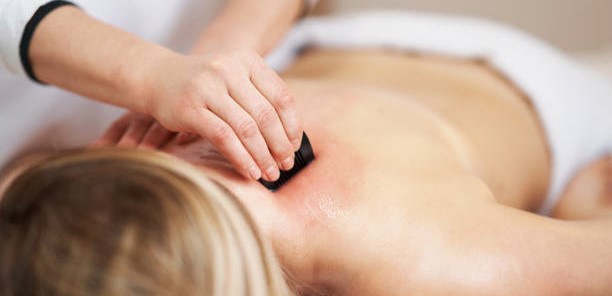
At Acufy Clinic, We provide advanced, scientifically grounded Gua Sha therapy to resolve chronic musculoskeletal restrictions and accelerate cellular tissue recovery. Led by an experienced College of Naturopathic Medicine (CNM) graduate with over 10 years of intensive clinical training, our facility translates traditional press-stroke friction protocols into modern, evidence-based Instrument-Assisted Soft Tissue Mobilisation (IASTM).
By applying specialised, smooth-edged tools across hypertonic muscle zones, we induce a controlled microhemolysis that triggers a rapid 400% surge in microvascular perfusion. This targeted clinical process downregulates nervous system pain signalling pathways, breaks down dense cross-linked fascial adhesions, and stimulates deep fibroblast proliferation.
Experience Gua Sha therapy – an objective, non-invasive treatment track tailored to your unique biological blueprint – available face-to-face as an integrated clinical protocol or a focused intensive session.
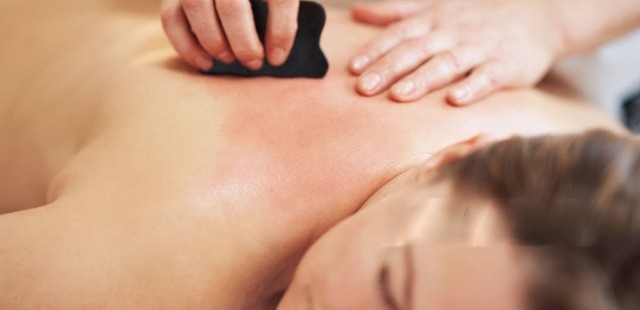
Clinical Benefits of Gua Sha Therapy
Systemic physiological indications verified by clinical instrument-assisted soft tissue mobilisation (IASTM) protocols.
Muscle and Neuro-Downregulation

Chronic Pain & Ischemic Breakdown
Resolving Persistent Musculoskeletal Pain
By applying targeted press-stroke friction using smooth clinical tools, this therapy decompresses rigid muscle fibres trapped in ischemic states. It disrupts sustained micro-spasms within hypertonic tissue zones, giving local blood vessels breathing room to restore standard nutrient delivery. This targeted mechanical loading down-regulates overactive nervous system pain signalling pathways, providing long-term relief for chronic neck, shoulder, upper back, and lumbar tension.
Adhesion Disruption & Fascial Release
Breaking Down Dense Myofascial Adhesions
Chronic structural strain and poor posture cause collagen fibres to cross-link into dense, unnatural myofascial adhesions. This advanced physical mobilisation applies precise deep pressure to separate stuck, rigid tissue bands. By stimulating local fibroblast activity to reconstruct smooth, flexible structural boundaries, it restores structural range of motion, alleviates chronic joint stiffness, and reverses deep-seated scar tissue restriction.
Perfusion and Metabolic Clearing
Vascular Perfusion & Metabolic Clearance
Upregulating Local Microvascular Circulation
The mechanical friction strokes induce a controlled, transitory microhemolysis within local capillary networks. This vascular response triggers an 400% surge in microperfusion, carrying a high volume of oxygenated blood directly into damaged tissue layers. This accelerated perfusion process clears trapped lactic acid pools, cellular debris, and metabolic waste fragments, instantly relieving the deep tissue toxicity that causes aching muscles.
Cytokine Balance & Immune Activation
Systemic Anti-Inflammatory & Immune Support
Extravasated red blood cells breakdown and naturally trigger the upregulation of the cytoprotective enzyme Heme Oxygenase-1 (HO-1). This systemic biological response down-regulates pro-inflammatory cytokines while balancing the body’s natural defence pathways. This microvascular stimulation provides powerful, full-body anti-oxidative benefits, accelerating cellular recovery lines and reducing inflammatory triggers for chronic systemic conditions.
Read more about the scientific studies backing these benefits below.
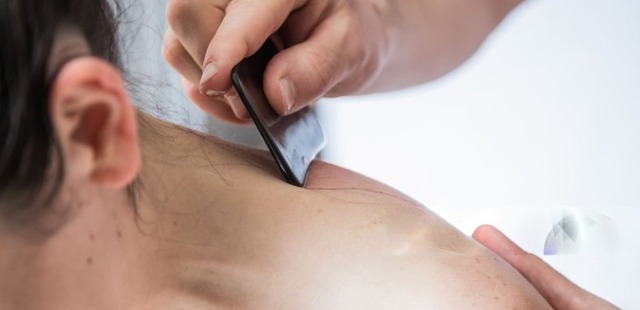
Clinical Conditions Managed with Gua Sha Therapy
Physiological indications and clinical pathology groups responsive to instrument-assisted soft tissue mobilisation (IASTM).
Cervicogenic & Upper Back
SPINAL & AXIAL PARASPINAL
Chronic Neck, Shoulder & Upper Back Pain
Prolonged mechanical strain, desk fatigue, and poor posture cause severe hypertonicity across your trapezius, levator scapulae, and rhomboid muscles. This targeted friction therapy decompresses these tight muscle zones, flushes out trapped metabolic waste, and downregulates overactive nervous system pain signals. It provides deep, long-term relief for chronic neck tension, shoulder impingement stress, and persistent upper back stiffness.
Lumbar & Pelvic Hip Decompressions
LUMBAR & LOWER EXTREMITY
Lumbar Strain, Sciatica & Gluteal Hypertonicity
Deep fascial restrictions within your lumbar fascia, gluteus medius, and piriformis muscles frequently compress nearby nerve roots, triggering radiating sciatic pain and lower back discomfort. Applying precise, deep press-stroke pressure separates stuck, rigid tissue bands, decompresses the nerve paths, and improves tissue flexibility. This process restores fluid range of motion across your pelvic girdle and stabilises lower spine movement.
Tension Headaches & Craniofacial Tone
NEURO-VASCULAR CRANIOFACIAL
Chronic Tension Headaches & TMJ Dysfunction
Sustained stress, jaw clenching, and cervical strain can lock your temporalis, masseter, and suboccipital muscle groups into restricted states, causing severe tension headaches and painful TMJ clicking. Utilising gentle, specialised clinical tools relaxes hypertonic facial muscles, increases regional blood volume, and unbinds restricted cranial fascia, safely reducing headache frequency and restoring natural jaw tracking.
Cumulative Motion Tendinopathies
OVERUSE TENDINOPATHY MATRIX
Repetitive Strain Injuries & Plantar Fasciitis
Repetitive motions from sports or typing can force the thick fascial bands in your forearms and feet to cross-link into dense, painful adhesions, leading to conditions like tennis elbow or plantar fasciitis. This specialised physical mobilisation breaks up micro-scar tissue and stimulates local fibroblast cells to reconstruct smooth, flexible structural boundaries. This significantly accelerates tendon recovery and reduces morning heel pain.
Immune Balancing & Systemic Congestion
IMMUNOMODULATORY VASCULAR
Respiratory Congestion & Inflammatory Flare-Ups
When applied across your upper thoracic spine paraspinal zones during acute respiratory challenges, the treatment stimulates localised microperfusion and upregulates the anti-inflammatory enzyme Heme Oxygenase-1 (HO-1). This systemic biological response balances pro-inflammatory cytokines, assists in clearing stubborn lung congestion, downregulates autonomic stress nervous system tone, and accelerates full immune recovery tracks.
Explore the full index of chronic musculoskeletal, neurological, internal medicine, and dermatological conditions we treat in Essex.

Gua Sha Therapy: The Process & Aftercare
No. When performed properly by a trained practitioner, Gua Sha is not painful and does not cause bruising.
The characteristic red or purple marks that appear after a session are medically known as therapeutic petechiae or capillary extravasation. These marks occur because the smooth, specialised friction tools gently draw stagnant, oxygen-depleted blood out of micro-vessels and into the surrounding tissue layer.
Unlike a traumatic bruise (which is caused by blunt-force impact that crushes tissue and hurts when pressed), these marks are completely non-painful to the touch and vanish naturally within 2 to 5 days as your immune system recycles the cellular debris. Most patients report an immediate, deep sense of structural relief and warmth during the process.
Gua Sha works by breaking down dense tissue restrictions and immediately increasing local blood volume by up to 400%.
When your muscles are under chronic stress or stuck in a repetitive posture, collagen fibres bind together tightly, creating hard, painful lumps called myofascial adhesions. These tight bands compress nearby blood vessels, cutting off fresh oxygen and trapping metabolic wastes like lactic acid inside the tissue.
By applying precise press-stroke friction using smooth clinical tools, our protocol stretches and decompresses these stuck muscle layers. This mechanics flushes out trapped metabolic toxins, downregulates overactive nervous system pain signals, and introduces an immediate surge of oxygenated blood to accelerate deep cellular repair.
Our practice functions as Instrument-Assisted Soft Tissue Mobilisation (IASTM) – a medical-grade physical therapy designed to treat deep internal pathology.
High-street beauty spas generally use very light, gentle facial stroking with jade rollers strictly to reduce surface puffiness and assist with lymphatic fluid drainage.
In contrast, our clinical application focuses on deep musculoskeletal and neuromuscular manipulation across hypertonic muscle zones, tendons, and dense fascial lines. We target conditions like chronic neck immobility, repetitive strain injuries, sciatica, and tension headaches. Furthermore, our treatments are designed to trigger a systemic biochemical response – specifically upregulating the cytoprotective enzyme Heme Oxygenase-1 (HO-1) – to provide powerful, full-body anti-inflammatory relief.
Yes. While Gua Sha is incredibly safe, there are clear medical safety rules where we will adapt or avoid the treatment.
We will never perform friction therapeutics directly over open wounds, active skin flares (such as severe eczema, psoriasis, or cystic acne), sunburn, varicose veins, or unidentified lumps. It is also strictly avoided on patients with acute bleeding disorders or those taking heavy medical anti-coagulant medications (blood thinners).
During your comprehensive onboarding inquiry screening, we exhaustively review your medical history file to ensure that every stroke is safe and tailored to your unique biological blueprint.
Post-treatment care is simple but vital to support your body’s natural tissue remodelling phase:
Keep the area covered and warm: Your pores are highly simulated and open immediately post-treatment. Avoid cold drafts, air conditioning, swimming pools, or cold showers for at least 24 hours.
Stay hydrated: Drink plenty of room-temperature or warm water to help your kidneys flush away the metabolic waste fragments cleared from your muscles.
Avoid intense exertion: Give your body a rest for the remainder of the day. Avoid heavy weightlifting or high-impact exercise to let the cellular tissue repair pathways work efficiently.
Begin Your Targeted Gua Sha Therapy
Put our 10+ years of clinical training and council-licensed expertise to work for your health. Our Gua Sha protocols resolve your deep myofascial restriction. Initiate your comprehensive clinical treatment at our Great Totham facility today or begin with a risk-free consultation.
Schedule Full Clinical Intake
Book Free Mini Consultation (Worth £15)
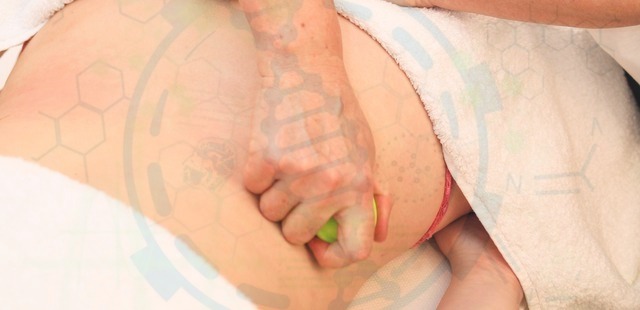
The Science and Clinical Evidence Behind Gua Sha Therapy
Translating classical press-stroke friction therapeutics into modern, evidence-based biomechanical and microvascular soft-tissue mobilisation.
Microvascular Perfusion
400% Microcirculation Surge
Clinical microvascular tracking using advanced laser Doppler imaging confirms that press-stroke friction manipulation induces a rapid 400% increase in local microperfusion. Objective trials archived on the National Institutes of Health (PubMed)1 demonstrate that this dramatic surge in tissue blood flow volume persists for over 25 minutes post-treatment, significantly reducing regional myalgia and accelerating metabolic waste clearing.
HO-1 Pathway Induction
Upregulation of HO-1 Pathways
The strategic friction strokes trigger intentional microhemolysis within subcutaneous capillary networks, releasing hemoglobin debris. Preclinical molecular assays published via the PubMed Central (PMC) database2 prove that this process upregulates the Heme Oxygenase-1 (HO-1) gene expression. This cytoprotective enzyme provides a powerful, systemic anti-inflammatory and anti-oxidative response.
Fascial Remodelling
Myofascial Adhesion Remodelling
As a specialised variant of Instrument-Assisted Soft Tissue Mobilisation (IASTM), Gua Sha provides profound mechanical loading directly onto deeper fascial architecture. Biomechanical research reviews published in the Wiley Journal of Cosmetic Dermatology3 confirm that this targeted pressure breaks down dense cross-linked fascial adhesions and triggers fibroblast proliferation to reconstruct smooth soft-tissue stability.
- Nielsen A, Knoblauch NT, Dobos GJ, Michalsen A, Kaptchuk TJ. The effect of Gua Sha treatment on the microcirculation of surface tissue: a pilot study in healthy subjects. Explore (NY). 2007 Sep-Oct;3(5):456-66. doi: 10.1016/j.explore.2007.06.001. PMID: 17905355. (https://pubmed.ncbi.nlm.nih.gov/17905355) ↩︎
- Kwong KK, Kloetzer L, Wong KK, Ren JQ, Kuo B, Jiang Y, Chen YI, Chan ST, Young GS, Wong ST. Bioluminescence imaging of heme oxygenase-1 upregulation in the Gua Sha procedure. J Vis Exp. 2009 Aug 28;(30):1385. doi: 10.3791/1385. PMID: 19718012; PMCID: PMC3149908. (https://pmc.ncbi.nlm.nih.gov/articles/PMC3149908) ↩︎
- Ahn, S.-h., Hwang, U.-j., Han, H.s., Kim, J.-h., Lee, H.-j., Jeon, Y.-r., Lee, H.H. and Hwang, A.-h. (2025), Comparative Effects of Facial Roller and Gua Sha Massage on Facial Contour, Muscle Tone, and Skin Elasticity: Randomized Controlled Trial. J Cosmet Dermatol, 24: e70236. https://doi.org/10.1111/jocd.70236 (https://onlinelibrary.wiley.com/doi/10.1111/jocd.70236) ↩︎
Disclaimer: The information provided on this page is for general educational purposes only and does not constitute personalised medical advice. Gua Sha therapy is an advanced physical treatment that should always be administered by a qualified, council-licensed practitioner following an exhaustive personal health assessment.