




Infrared Heat Therapy: Deep Tissue TDP Treatment
Our clinical infrared heat therapy in Essex uses a specialised TDP physiotherapy unit fitted with a mineral-ceramic emitter plate formulated with a blend of trace elements (classically described as 33 minerals).
A controlled, insulated heating element raises the plate to working temperature. The plate then emits non-ionising far-infrared energy in a spectrum commonly described as 2,000–2,500 nm. That band overlaps the infrared the body already radiates as heat.
Energy is absorbed at the surface; therapeutic warmth can then influence superficial muscle, fascia, and many peripheral joints over a few centimetres. We use this as clinician-supervised adjunctive heat to help with stiffness, spasm, and comfort.
Therapeutic Benefits of Infrared Heat Therapy for Pain & Tissue Support
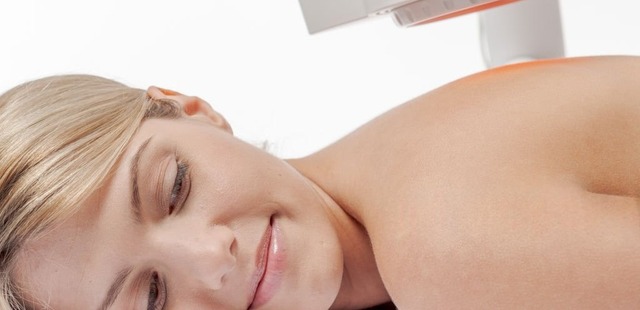
The medical-grade TDP Far Infrared Heat Therapy lamps we use:
– Ease muscle Tension and Spasms by increasing Blood flow to the affected area.
– Help with stiffness and comfort with joint or muscle pain – including symptoms linked to Osteoarthritis, Fibromyalgia, or Back pain.
– Aid in the delivery of Oxygen and Nutrients to tissues, promoting wellness.
– Provide a Soothing effect, helping to Reduce stress and Promote relaxation.
Conditions Treated with Infrared Heat Therapy
We use it to complement other treatments for variety of health issues including:
- Arthritis
- Back pain
- Neck pain
- Muscle Strains and Sprains
Chronic Pain Conditions (weak evidence)
Circulatory Issues
- Poor Circulation.
Stress
- Stress Relief
- Muscle Tension.
To see how our multi-modality clinic utilises advanced far-infrared high-energy spectrum waves to accelerate deep tissue-level support, discover the full range of chronic musculoskeletal, neurological, internal medicine, and dermatological conditions we treat in Essex.

Infrared Heat Therapy Essex: Clinical FAQ & Patient Guidelines
Red / near-infrared LED therapy (photobiomodulation) uses visible red and near-infrared light, typically around 660 nm and 850 nm. You usually see a red glow. At those wavelengths the aim is a non-heating, cellular effect – often described as light acting on mitochondria – not warming the joint like a heat pack.
This lamp is far-infrared (FIR) heat from a mineral-ceramic TDP plate. It emits in a much longer band, commonly 2,000–2,500 nm. Energy is absorbed in the outer skin; the useful effect is therapeutic heat, which can ease stiffness, reduce muscle spasm, and support local circulation.
There is little or no visible light. You should feel even, dry warmth..
We use Medical-grade TDP Far-Infrared Mineral Lamps alongside our physical therapies to combine mechanical work with thermal cellular therapy. The specialised mineral plate emits 4–16 μm far-infrared waves that match the body’s natural energy field.
No. Heat is only to help you move more comfortably on the day. Strength, mobility, and regular exercise still do the long-term work.
We also offer lifestyle and practical psychology counselling in Essex – practical support with exercise habits, sleep, stress, and the daily patterns that influence pain and recovery – so the session is not left to do the job on its own.
We use units which are NMPA-registered in China as adjuvant physiotherapy for osteoarthritic joints.
Ready to put targeted mineral-plate far-infrared heat on the area that will not let go – more local blood flow, less guarding, a joint that can actually move? Schedule Your Advanced Essex Holistic Alternative Therapy Session Online Now.
Clinical Evidence: The Science Behind Our Far-Infrared Care
Far-infrared heat therapy is one of the adjunct tools we use in Essex to ease musculoskeletal pain, reduce stiffness, and support local circulation. It’s part of a clinician-directed plan, and it is not a substitute to see your GP.
At Acufy we use a mineral-plate far-infrared (TDP) therapy lamp: a medical-device-class emitter that delivers dry, targeted radiant heat to the area we are treating.
What this therapy is
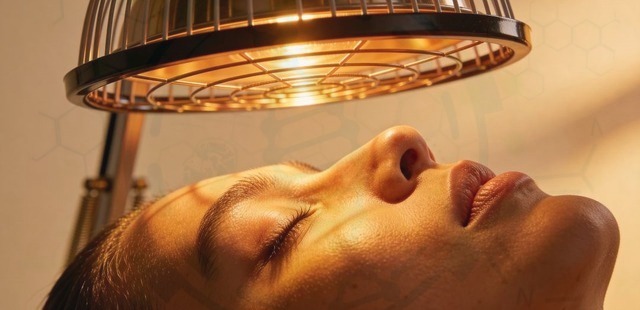
TDP stands for Teding Diancibo Pu – specific electromagnetic spectrum. Unlike a visible red heat bulb, a TDP-style head does not rely on a glowing lamp. A mineral-ceramic plate is heated from behind. The hot plate then radiates far-infrared energy, typically described in the 2,000–2,500 nm band1.
That band matters for a simple physical reason: human skin itself emits infrared heat that peaks near 9.4 μm (9,400 nm). Far-infrared from a ceramic plate is the same family of energy your tissues already exchange as heat. You feel it as a deep, dry warmth – not a bright light.
Our device’s treatment head uses multi-peak (pagoda) mineral-ceramic plate and a rare-earth ceramic heater rather than a traditional heating wire. The geometry is designed for more even irradiation and fewer hot spots than a flat disc. In China the device is registered as a Class II medical device for adjuvant physiotherapy of osteoarthritis of the knee, shoulder, cervical spine, and lumbar joints.
The mineral blend in the plate (classically described as a formulation of trace elements) is the emitter material. It shapes how the plate radiates infrared.
How far-infrared interacts with tissue
Three mechanisms are relevant in a treatment room.
Therapeutic heat
Far-infrared is absorbed strongly by water in the outer layers of skin and is experienced as radiant heat. Local temperature rise produces cutaneous vasodilation, higher local blood flow, reduced muscle guarding, and greater tissue extensibility. This is the same physiologic rationale that underpins heat as a non-pharmacological option in osteoarthritis care. Expert consensus on knee disease continues to support heat in the subacute and chronic phases to improve pain, stiffness, and comfort before movement2.
Microcirculation and endothelial signalling
In experimental work, far-infrared has been shown to increase skin microcirculation3. In a controlled animal study, skin blood flow rose after FIR exposure even when skin temperature during irradiation did not – suggesting the vascular effect. Cell studies have linked non-heating FIR to endothelial nitric-oxide pathways (eNOS phosphorylation via PI3K)4.
Comfort, spasm, and pain modulation
Warmth stimulates thermoreceptors, can reduce muscle spasm, and may influence pain gating. Patients often describe TDP heat as deeper than a pack. That is a real sensory difference (dry radiant FIR versus contact conduction).
Far-infrared photons are absorbed within a fraction of a millimetre of the surface. The useful effect is thermal: heat then spreads by conduction and blood flow on the order of one to a few centimetres, enough to influence superficial muscle, fascia, and many peripheral joints.
What the clinical literature shows
Far-infrared and therapeutic heat have a published evidence base, and mineral-ceramic emitters are the hardware class this lamp belongs to.
Musculoskeletal pain, stiffness, and osteoarthritis
A 2022 systematic review of infrared applications in musculoskeletal conditions and chronic pain (13 studies) concluded that infrared is a safe complementary therapy with signal for knee osteoarthritis, fibromyalgia, and chronic myofascial pain, while evidence for low back pain and sports-muscle recovery was mixed and methods were heterogeneous5.
Heat itself remains guideline-congruent for chronic knee osteoarthritis: used in subacute/chronic phases to ease pain and stiffness and to prepare tissue for exercise. Our NMPA-aligned use of the device – adjuvant care for osteoarthritic joints – sits inside that tradition.
Infrared sauna research in rheumatoid arthritis and ankylosing spondylitis has shown good tolerance and short-term improvement in pain and stiffness6.
Circulation
Beyond the microcirculation work above, a landmark clinical trial in haemodialysis patients found that repeated far-infrared treatment of arteriovenous fistulas (40 minutes per session over a year) was associated with better access blood flow and a lower rate of fistula malfunction (12.5% vs 30.1%)7.
Soft tissue, in the laboratory
In a rat full-thickness wound model, FIR was associated with faster closure, more fibroblast activity, and greater TGF-β1 expression, including under conditions where skin temperature did not significantly rise. It supports the idea that FIR is biologically active in skin and connective tissue, not merely a space heater.8
Ceramic far-infrared materials
Ceramic FIR (cFIR) materials have been studied for effects on oxidative stress markers, macrophage responses, and inflammatory models. This literature is why a mineral-ceramic plate is a legitimate FIR emitter.
Mineral-plate far-infrared therapy is evidence-informed adjunctive heat and circulation therapy for selected musculoskeletal problems.
How we use mineral-plate far-infrared (TDP) therapy lamps in this clinic
| Our protocol | |
|---|---|
| Device | Mineral-plate far-infrared (TDP / spectrum) lamp, multi-peak synergistic spectrum technology |
| Role | Adjunct to assessment, movement, and the rest of your plan |
| Preheat | Approximately 5 minutes |
| Distance | Typically 20–30 cm, adjusted so warmth is strong but never painful |
| Time | Usually 15–20 minutes to the target region |
| Frequency | Individual; often 1–2 times per visit or as prescribed |
| Skin check | Early in the session, and immediately if anything feels too hot |
You remain clothed or draped as appropriate; the area being treated is exposed. The head is positioned by the clinician. A timer is used.
Who it may help
Often considered
- Osteoarthritis-related pain and stiffness of the knee, shoulder, neck, or low back
- Muscle spasm and myofascial tightness
- Adjunct during or after manual therapy or acupuncture-style care, as a smoke-free heat source
- Patients who tolerate dry radiant heat better than a moist pack
We screen out or modify
- Impaired heat sensation (including some neuropathy)
- Poor arterial circulation in the area, acute dermatitis, or open infection
- Over a known or suspected malignancy in the field
- Acute fever, acute haemorrhage, or acute inflammatory flare where heat is the wrong stimulus
- Pregnancy (especially abdomen and low back) unless specifically cleared
- Direct irradiation of the eyes without protection
- Anyone who cannot communicate discomfort
If heat is wrong for you that day, we use something else.
- Vatansever F, Hamblin MR. Far infrared radiation (FIR): its biological effects and medical applications. Photonics Lasers Med. 2012;4:255–266. (https://pmc.ncbi.nlm.nih.gov/articles/PMC3699878) ↩︎
- Rossi R (2024) Heat therapy for different knee diseases: expert opinion. Front. Rehabil. Sci. 5:1390416. doi: 10.3389/fresc.2024.1390416. (https://www.frontiersin.org/journals/rehabilitation-sciences/articles/10.3389/fresc.2024.1390416/full) ↩︎
- Yu SY, et al. Biological effect of far-infrared therapy on increasing skin microcirculation in rats. Photodermatol Photoimmunol Photomed. 2006;22(2):78–86. (https://pubmed.ncbi.nlm.nih.gov/16606412) ↩︎
- Hsu YH, et al. Far-infrared therapy induces the nuclear translocation of PLZF which inhibits VEGF-induced proliferation in human umbilical vein endothelial cells. PLoS One. 2012;7(2):e30674. (https://journals.plos.org/plosone/article?id=10.1371/journal.pone.0030674) ↩︎
- Tsagkaris C, et al. Infrared radiation in the management of musculoskeletal conditions and chronic pain: a systematic review. Eur J Investig Health Psychol Educ. 2022;12(3):334–343. (https://pubmed.ncbi.nlm.nih.gov/35323210) ↩︎
- Oosterveld FGJ, et al. Infrared sauna in patients with rheumatoid arthritis and ankylosing spondylitis. Clin Rheumatol. 2009;28(1):29–34. (https://pubmed.ncbi.nlm.nih.gov/18685882) ↩︎
- Lin CC, et al. Far-infrared therapy: a novel treatment to improve access blood flow and unassisted patency of arteriovenous fistula in hemodialysis patients. J Am Soc Nephrol. 2007;18(3):985–992. (https://pubmed.ncbi.nlm.nih.gov/17267744) ↩︎
- Toyokawa H, et al. Promotive effects of far-infrared ray on full-thickness skin wound healing in rats. Exp Biol Med. 2003;228(6):724–729. (https://pubmed.ncbi.nlm.nih.gov/12773705) ↩︎